

On November 19, 2025, Makigumi hosted Akiya Gathering vol.2, this time held online to welcome participants from all over Japan and beyond.
Following the warm response to the first in-person event in Tokyo, this session aimed to open the conversation to a wider audience—those curious about Japan’s akiya (vacant houses) and how these homes can inspire new lifestyles.
About 10 participants joined the Zoom session from across Japan, as well as from overseas. Some were already exploring opportunities to buy or renovate akiya, while others simply wanted to learn what this movement is about.
Event Report for Offline event, Akiya Gathering vol.1 in Kagurazaka, Tokyo is available here.
Presentation and Exchange: Makigumi’s Project and Understanding Akiya Situation in Japan
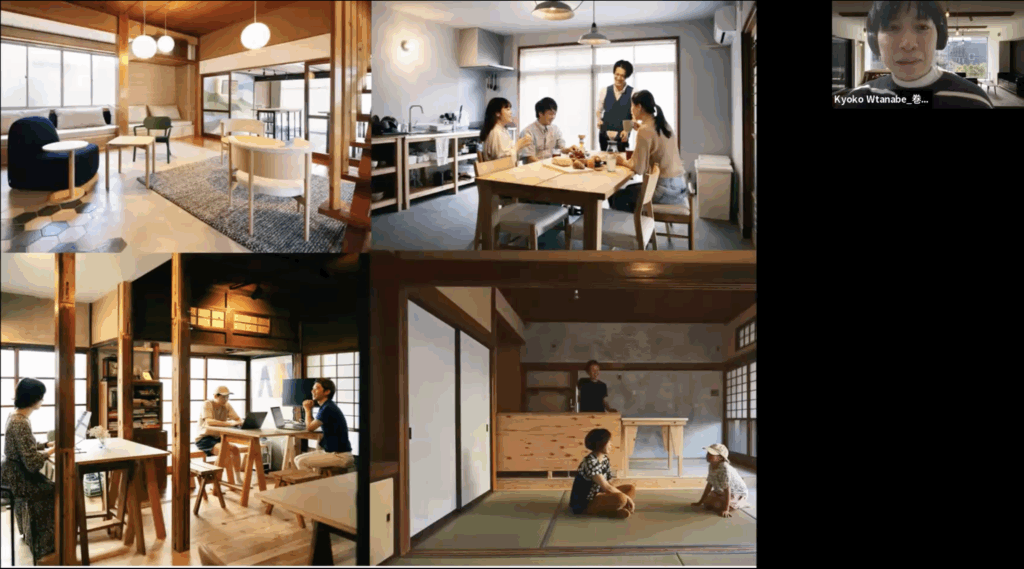
During the presentation, Makigumi’s CEO Kyoko Watanabe introduced several of Makigumi’s ongoing projects, along with the story behind how the company began its work in Ishinomaki after the 2011 Great East Japan Earthquake. She explained how Makigumi gradually shifted from post-disaster local revitalization to renovating vacant houses, creating community spaces, and supporting new ways of living.
Watanabe then explained the major issues surrounding akiya in Japan. Many akiya remain unused because legal ownership is unclear, renovation costs seem overwhelming, or families living in cities have no reason to return to these homes. These structural challenges are not just about real estate, but are deeply tied to social change and aging demographics.
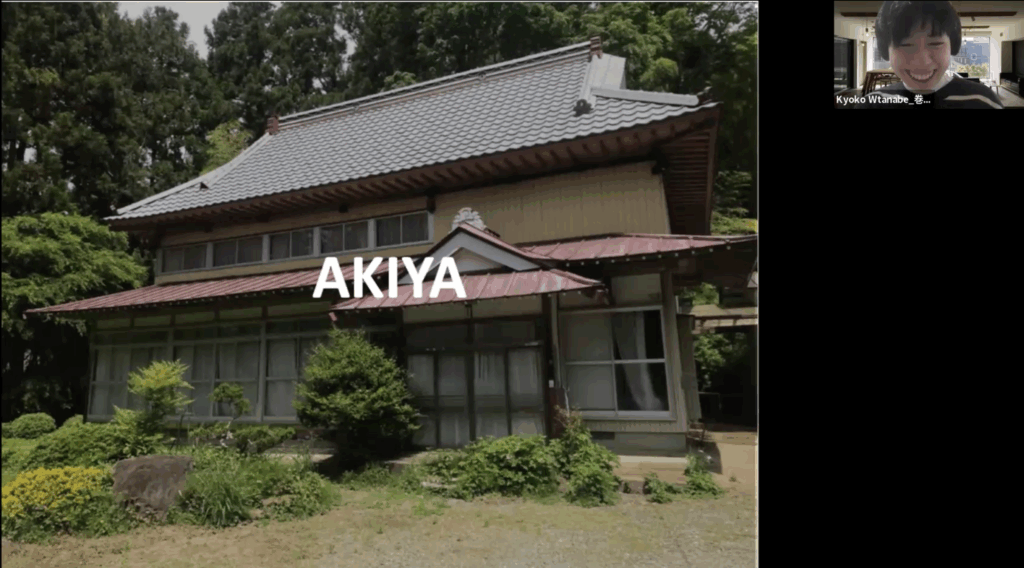
This naturally raised the question of how foreigners might be able to engage with akiya. Watanabe highlighted that although the system can appear complicated, there is growing space for non-Japanese residents to participate—both as potential residents and as contributors to regional revitalization. Watanabe suggested that they may play an important role in giving new life to places that Japanese communities struggle to maintain. She emphasized that Japan’s current moment where many homes are unused yet full of potential.
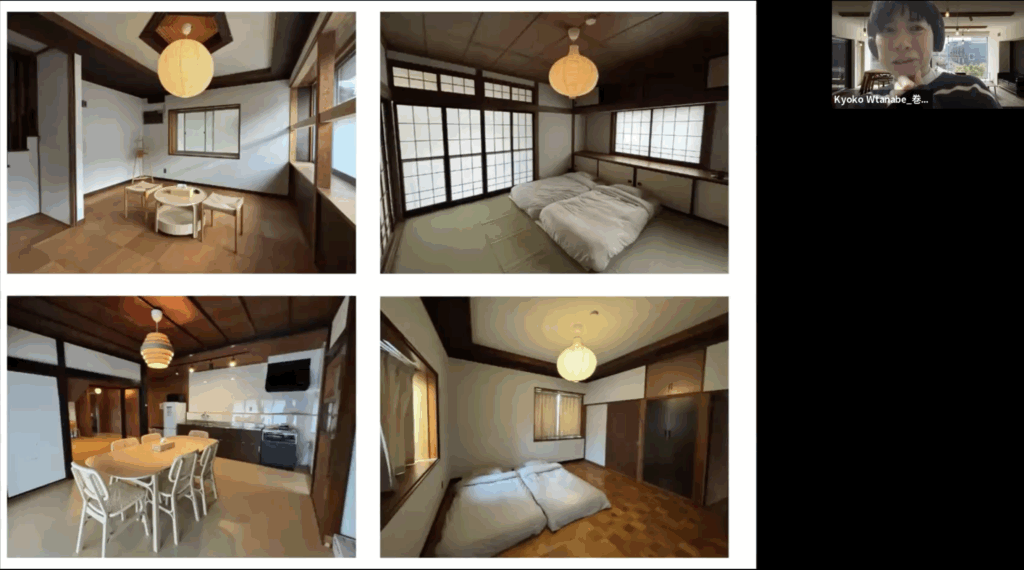
Among various possibilities, Watanabe introduced one of Makigumi’s recent initiatives that has shown particularly strong potential: renovating entire houses into guesthouses that can serve as gateways for newcomers. She explained how these guesthouses allow people to experience local living and connect with residents. Through the examples, participants were able to imagine how akiya could support community growth, and even new forms of living for foreigners interested in deeper connections with Japan.
Inside the Akiya Conversation: Ideas, Obstacles, and Vacant Home Trends Around the World
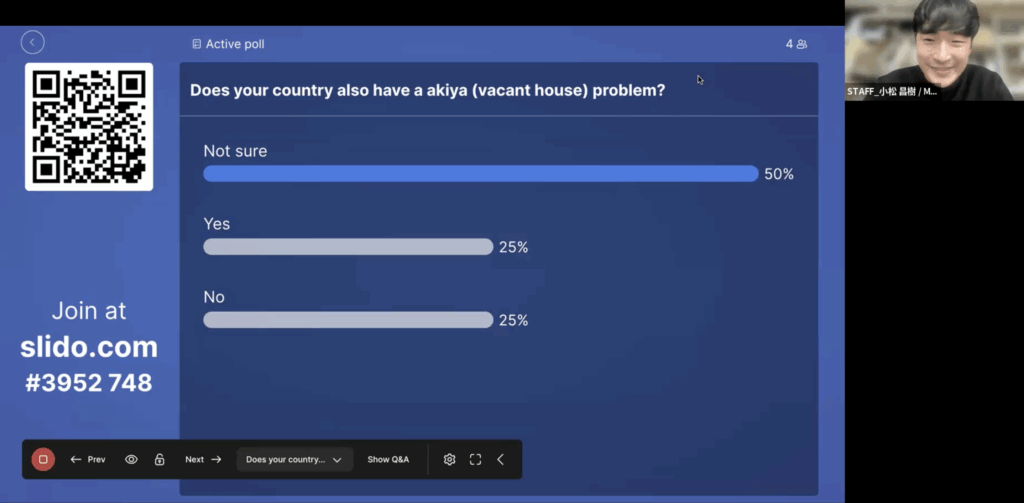
To deepen the conversation around global vacant home issues, we asked participants several questions throughout the session and invited them to share their insights. One key question explored whether their home countries also struggled with a vacant house problem. The responses revealed an interesting divide: while 25% of participants said “Yes,” and another 25% said “No,” the largest group—50%—answered “Not sure.”
This highlighted how differently vacancy is understood across regions and created a natural starting point for a deeper discussion.
Participants then shared real examples, including New York’s so-called “ghost apartments” and unique cases from Taiwan. These stories illustrated how cultural norms, housing markets, and social dynamics shape the meaning of vacancy in each country.
Ultimately, the conversation revealed a remarkably diverse global landscape—showing that while vacant homes are a shared topic, the challenges and perceptions vary widely around the world.
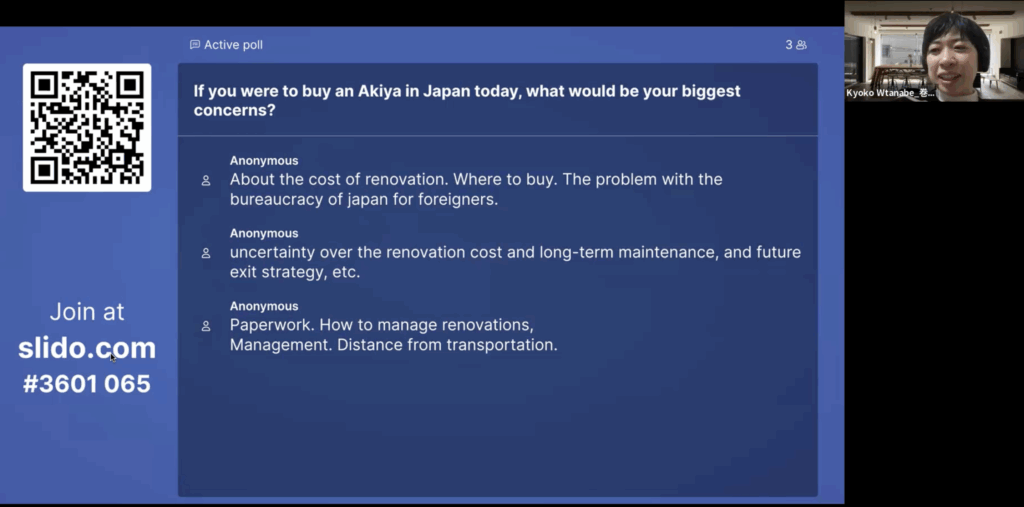
Another key question explored what concerns people might have when considering the purchase of an akiya in Japan. Participants pointed to several common barriers: uncertainty around renovation costs, ongoing maintenance, required paperwork, and the bureaucratic challenges that many foreign buyers often face.
These concerns opened the door to a deeper discussion about the complexity of navigating property ownership in Japan. Topics such as inheritance structures, renovation planning, and legal procedures surfaced quickly — all areas that can feel overwhelming, especially when dealing with unfamiliar Japanese terminology or administrative systems.
Through these exchanges, the group was able to examine akiya from multiple perspectives — economic, cultural, and practical. The conversation not only made the session highly interactive but also highlighted how globally relevant Japan’s vacant home issue has become.
🗓️ Vol.3 — In-person (December 9, 2025)
| Date & Time | Wednesday, December 9, 2025 19:00–21:00 |
| Admission | 1000yen(Ticket with one drink) |
| Capacity | Approximately 15 participants |
| Registration | Please complete your registration through this Peatix event page. Details and registration: Peatix Web Site |
Follow our updates on Instagram to stay connected, and join the next conversation to become part of the growing Akiya Gathering community!
Interested in Exploring Your Own Path?
If you would like to discuss your situation more personally
or want guidance on where to begin,
we are also offering one-on-one consultations through akiyafor.
We can talk about:
・How to search for akiya
・What to consider before renovation
・How to connect with local communities
・What lifestyle might fit you best
To request a session, contact: https://akiyafor.com/contact/